
Best practices for medicine management in care homes
Robust medication management processes help you reduce risk, support compliance and ensure residents receive the right medication, at the right time, every time.

Managing medicines safely is one of the most important responsibilities in any care home. With many residents taking multiple medications, there are more opportunities for errors during prescribing, dispensing, administration and monitoring.
While residents should be involved in decisions about their medicines wherever possible, care teams need clear, reliable processes to ensure safe and consistent medication management. Strong systems help you reduce risk, support the 'five rights' of medication administration, improve efficiency and provide confidence that medicines are being managed correctly.
In this guide, we look at the medication management best practices that can help you strengthen safety, compliance and day-to-day efficiency.
What are best practices for safer medicine management in care homes?
Compliance with regulations
Care settings must adhere to regulations around medicines management. For example, Standard 4 of the CQC's guidance for providersasks the question: "How does the provider ensure the proper and safe use of medicines?" and evaluates care homes in areas such as:
- Having relevant policies, procedures and training in place for medicines management
- Ensuring people receive their medicines as intended and that this is recorded appropriately
- The process of medicines management: ordering, transporting, storing and safe disposal
- Covert administration of medicines, if necessary, in line with the Mental Capacity Act 2005
- Safeguarding against the inappropriate or excess use of medicines to control people's behaviour
- Assessing the level of support needed for people to take their medication
- How a care provider engages with other healthcare professionals in relation to medication reviews
- Keeping accurate, up-to-date information about medication needs when moving between care settings
Not only do care providers need robust medicines management processes, they also need to evidence them clearly for regulators such as the CQC, Care Inspectorate and Healthcare Inspectorate Wales.
Read more in our checklist for CQC compliance for medications
Record keeping is vital in managing medicines. Paper MAR charts were once standard practice but paper records can quickly become out of date, illegible, incomplete, inaccurate or inaccessible. Increasingly, care providers are moving to eMAR system such as PCS eMAR by Camascope because they improve safety, accuracy and efficiency, and make it easier to evidence compliance.
Have a system in place for medication admin
People living in care homes often rely on care teams to administer medicines safely and accurately. Effective medicines management procedures help make sure medication is given correctly while reducing opportunities for error.
This is particularly important in the context of polypharmacy. Polypharmacy describes the use of multiple medications by one person, typically five or more. It's common in care homes, where many residents live with several long-term health conditions that require different treatments. The more medicines a resident takes, the greater the risk of missed doses, duplicate medicines, adverse drug interactions and administration errors.
A robust medication admin system should include checking allergies before new medicines are prescribed, clear protocols for adverse reactions, preparing medicines for one resident at a time and recording administration only after medicines have been given.
For PRN and over-the-counter medicines, staff should always assess need with the resident rather than making assumptions. Many providers also introduce protected medication rounds or no-interruption zones to help staff concentrate during administration.
A digital system such as PCS eMAR by Camascope can help you manage the complexity that comes with polypharmacy. By providing a clear, up-to-date record of each resident's medications, administration schedules and medication history, eMAR reduces the reliance on paper records and manual checks. The systems makes it easy for staff to verify the right resident, right medication, right dose and right time before administration, while automated alerts and audit trails support safer decision-making and stronger oversight.

Top 5 medication errors in care homes
Wrong dose, missed dose, the wrong resident and more. Learn about the most common medication errors in care homes and how to avoid them.Maintaining stock and re-ordering of medicines
Effective stock management helps make sure residents receive the medicines they need, and you reduce waste caused by over-ordering.
Alongside prescribed medicines, you also need oversight of PRN medicines (those taken 'as needed') such as pain relief, inhalers, creams and natural remedies.
Digital systems such a PCS eMAR by Camascope include stock warnings to help reduce the risk of running short of medication and support timely ordering of replacement stock.
Analytics and management oversight
Good oversight helps your team understand what's working well, identify risks and highlight opportunities for improvement.
Management reporting can reveal issues such as unusually short medication rounds, missed checks or training needs, helping you take action before problems escalate. The same data can also help demonstrate compliance and quality improvement during inspections by providing a clear audit trail of medicines management activity.
Strong reporting via a system such as PCS eMAR helps managers spend less time searching through records and more time focusing on improvements that support residents and staff.
Integrating with pharmacies
Medicines management works best when care homes and pharmacies share accurate, up-to-date information. When prescriptions change, prompt communication means pharmacies dispense the correct medicines with accurate dosage information.
Integrated systems can reduce the time spent chasing prescriptions, updating records and re-ordering stock. For pharmacies, our PCS eMAR integration can improve dispensing accuracy and help streamline prescription processing.
Embracing technology
The best practice foundation of effective medicines management include safety, efficiency, stock control, pharmacy integration, compliance and oversight. Technology helps bring all these elements together. A digital system such as PCS eMAR by Camascope can improve accuracy, reduce administration errors and give the visibility you need to support continuous improvement.
Many providers already use digital care planning tools such as PCS Care so eMAR is often the next step in improving operational efficiency and strengthening medication management.
Here's what some of our customers said about how they transformed medicines management with eMAR:
"Overall, I'd definitely recommend the eMAR software because it minimises the time that it takes to manage medicines while improving best practice."
Mihaela Munteanu, Home Manager, Bluebell Place
"The system has received high praise from all members of the care team. Its effectiveness has been instrumental in streamlining and improving our medication management processes. The system's features have proven valuable, making it an indispensable tool for our daily routines."
Sarah Stuttle, Operations Director, Belvoir House, Rhencullen Care Group
"When it comes to medicines management, eMAR is so clever. It helps empower and supervise staff to make sure we're doing the best we can to provide a safe practice. No other technology has helped achieve this."
Lukasz Wawrzenczyk, Service Quality Manager, Kingsley Healthcare
"eMAR allows us to free up our time to focus attention on residents who require one-to-one care."
Jasper Rabang, Registered Nurse and Unit Lead, Marie Louise House Nursing Home
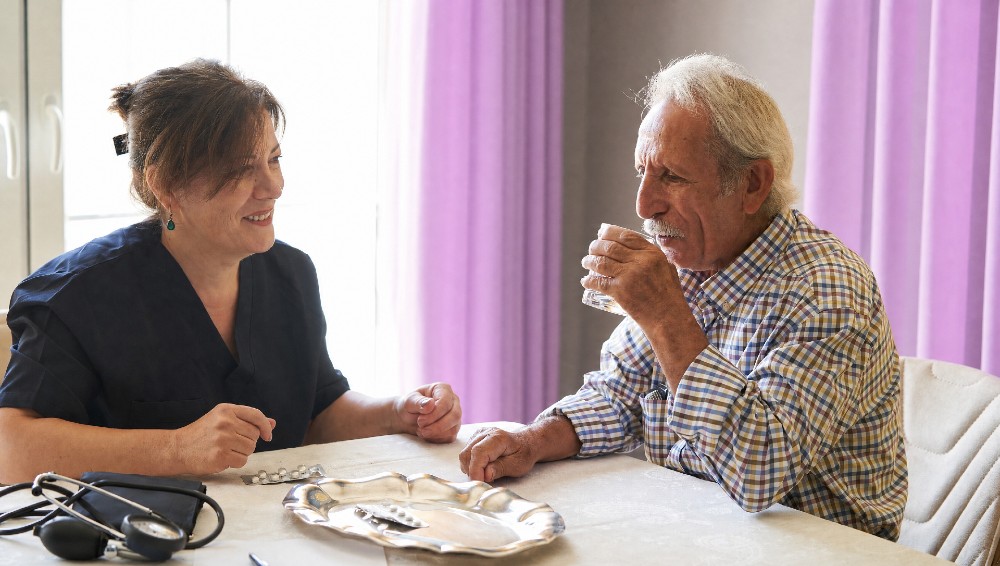
Manage meds confidently with built-in safety
PCS eMAR is built by working pharmacists, connecting the medication round, the pharmacy and group-wide oversight in one system. Talk to our experts about how PCS eMAR can help your organisation.
Other articles
Veteran-friendly care starts with recognising service
Learn about and request the free PCS Care section that helps you build a fuller picture of residents' Armed Forces backgrounds and service...
- 6 min read

Global PHP security issue: what it means for PCS customers
Recent reports of a critical PHP security vulnerability caused concern across the web. Find out how PCS responded, why customer services...
- 4 min read

Essential medication management training courses for care homes
Training for the safe management and administration of medicines is key for resident wellbeing, so here are some of the essential topics...
- 10 min read