
CQC compliance: checklist for medicines
Medicines management is a key focus of every CQC inspection. We've put together this practical checklist to help you review your processes, identify potential gaps and strengthen the evidence you need to demonstrate safe, effective and compliant medicines management.
Medicines management is a key area of every CQC inspection. While safe administration is essential, inspectors will also want to see the systems, processes and evidence that underpin how medicines are managed across your service.
This checklist is designed to help you review the main areas inspectors are likely to focus on, identify any gaps and build confidence ahead of your next inspection. For simplicity, we've grouped the checklist into two core areas: medicines management and medicines optimisation. Together, these areas provide a useful framework for reviewing how medicines are handled, monitored and improved across your service.
Medicines management
Medicines management covers the systems and processes that ensure medicines are ordered, received, stored, administered and disposed of safely. Inspectors will be looking for evidence that medicines are handled correctly, records are accurate and residents receive their medicines as prescribed, supported by the principles of the 'five rights': right person, right drug, right dose, right time and right route.
Medicines optimisation
Checklist for medicines: summary of CQC standards for medicines compliance
First, we've set out a high-level checklist covering the main areas of CQC medicines compliance.
Then, further down, we take a closer look at each key line of enquiry and the evidence inspectors are likely to expect.
S4 – How does the provider ensure the proper and safe use of medicines?
S4.1 - Ensure you have clearly defined policies, procedures and training and be sure to follow up-to-date professional guidance
S4.2 - Make sure residents are getting medicines as prescribed and always record this correctly
S4.3 - Have good systems in place for ordering, transporting, storing and disposing of medicines
S4.4 - Give covert medicines in line with the Mental Capacity Act
S4.5 - Ensure that behaviour is not inappropriately controlled using medicines – this should always be a last resort and always ensure that other methods are tried first
S4.6 - Assess what support a person might need with medicines in line with the Mental Capacity Act and encourage and support people to self-administer where appropriate – but assess the risk of this
S4.7 - Work with healthcare professionals to ensure that medicines are reviewed regularly
S4.8 - Ensure there is good communication with other professionals, for example at the transfer of care
What are the Key Lines of Enquiry (KLOEs) for safe use of medicines?
The KLOEs outline the questions that inspectors are looking to answer when they inspect care services. As outlined above, S4 covers the KLOEs for the safe use of medicines by asking how care providers ensure proper and safe use of medicines. Now let's look in more detail at the eight components that make up S4 and how you can ensure compliance:
1) Is the service’s role in relation to medicines clearly defined and described in relevant policies, procedures and training? Is current and relevant professional guidance about the management of medicines followed?
This relates to how the service provider and manager have established clear and robust systems to make sure that medicines are being managed safely. This includes appropriate training for staff who manage medicines, and an up-to-date, home-specific medicines policy that's in line with the most current guidance.
As a manager or provider, you'll know it's important to stay up to date with changes in guidance, for example, by regularly checking the CQC and NICE websites, subscribing to the CQC newsletter and attending courses.
2) How does the service make sure people receive their medicines (both prescribed and non-prescribed) as intended (including controlled drugs and ‘as required’ medicines), and that this is recorded appropriately?
This is arguably the most important aspect of medicines compliance because it encompasses both the administration of medicines and how its recorded, to make sure residents receive medications safely and as prescribed. Here are some suggestions on how to stay ahead of regulations and maintain CQC compliance:
Record complete, accurate medication information
Accurate records are the foundation of safe medicines management and are a key part of demonstrating compliance. An eMAR system can help you capture and maintain this information in real time, creating a clear audit trail and reducing the risk of errors.
At a minimum, records should include:
-
Resident details, such as name, date of birth and photograph
-
Relevant clinical information, including allergies and health conditions
-
Medicine details, such as name, strength and dose
-
Administration instructions, including route, timing and frequency
It's also good practice to have medicine-specific care plans where additional guidance is needed. This is especially important for PRN medicines.
A PRN protocol should clearly set out:
-
What the medicine is for
-
When it should be offered or administered
-
How it should be be used, including body maps for topical medicines where appropriate
-
How its effectiveness should be monitored
-
When further clinical advice should be sought
The same approach should be taken for natural or home remedies to make sure staff have clear, consistent guidance on when and how they should be used.
Follow safe medicines administration procedures
Your policies should support safe, consistent medicines administration and help staff follow best practice every time.
The CQC advises that multi-compartment compliance aids (MCAs) should not automatically be the first option for residents (source: CQC). Wherever possible, medicines should remain in their original packaging, with decisions based on the needs of the individual.
-
During medication rounds:
-
Minimise interruptions and distractions
-
Do not use secondary dispensing, where one member of staff prepares a medicine for another to administer
-
Never leave medicines unattended
-
Witness administration before recording it, unless an agreed self-administration arrangement is in place and documented as part of a risk assessment
If you're using MAR charts, records should be completed accurately and in real time. Every administration should be signed for, and any omitted medicine should have a clearly documented reason. There should be no unexplained gaps in the record.
Administration records should also capture the information needed to support safe ongoing care, including:
-
The exact time a medicine was given
-
The dose administered for variable-dose medicines
-
The application site for topical medicines, such as creams, ointments and patches
Where a witness signature is required, this should be recorded at the point of administration. This typically includes controlled drugs, handwritten MAR charts and any amendments to medication records.
Conduct regular medicines audits
Regular audits help you identify issues early, maintain accurate records and demonstrate good governance during inspections. A core part of this is making sure medicines can be fully accounted for. Stock levels should match what has been received, administered and disposed of, with any discrepancies investigated and documented.
Controlled drugs require particular attention. The controlled drugs register should be accurate, up to date and aligned with stock held on site.
Audits should also help you confirm that residents are receiving medicines as prescribed. This includes checking administration records, monitoring missed doses and ensuring sufficient stock is available to prevent interruptions to treatment.
Effective stock control supports both compliance and day-to-day efficiency. It reduces the risk of missed medicines, emergency orders and unnecessary waste.

Manage meds with built-in compliance
Signing off medication admin is fast, easy and accurate with PCS eMAR as your team can electronically sign using their handheld device.
3) How are medicines ordered, transported, stored and disposed of safely and securely in ways that meet current and relevant legislation and guidance?
Medicines should be ordered in line with residents' needs and checked on receipt to make sure supplies are accurate and complete. Maintaining appropriate stock levels helps reduce the risk of missed doses and rushed emergency orders.
Medicines should be stored securely to prevent loss, misuse or access by anyone they have not been prescribed for. Storage conditions also need to be monitored to ensure medicines remain safe and effective. This includes checking temperatures and recording opening dates for products with limited shelf lives, such as eye drops and creams.
When medicines are discontinued or reach their expiry date, they should be returned to the pharmacy for safe disposal. Disposal records should be maintained to provide a clear audit trail and demonstrate good control of medicines throughout their lifecycle.
4) Are there clear procedures for giving medicines covertly, in line with the Mental Capacity Act 2005?
Covert administration is the practice of giving a medicine without the person's knowledge, usually by disguising it in food or drink. Because it restricts an individual's choice and autonomy, it should only be considered as a last resort and where there is clear evidence that the person lacks the mental capacity to make their own decision about that treatment.
Any decision to administer medicines covertly should be made in line with the Mental Capacity Act 2005, be supported by a best interests decision and involve the appropriate healthcare professionals. Care plans and medication records should clearly document the decision-making process, the agreed approach and any reviews.
You should also be able to demonstrate that staff understand the home's policy on covert administration and know when additional clinical or legal advice is required.
5) How does the service make sure that people’s behaviour is not controlled by excessive or inappropriate use of medicines?
Psychotropic medications should never be used simply to make someone easier to manage. Inspectors want to see evidence that these medicines are prescribed for a clear clinical reason, regularly reviewed and used as part of a wider, person-centred approach to care.
Because psychotropic medicines can have significant side effects, they should only be considered when other appropriate interventions have been explored and when their use is clinically justified. Care plans, risk assessments and medication records should clearly document why the medicine has been prescribed, how its effectiveness is being monitored and when it will be reviewed.
Good record keeping is essential. You should be able to demonstrate that any psychotropic medicine is being used appropriately, proportionately and in the person's best interests.
6) How do staff assess the level of support a person needs to take their medicines safely, particularly where there are difficulties in communicating, when medicines are being administered covertly, and when undertaking risk enablement assessments designed to promote self-administration?
The level of support a person needs with their medicines should be assessed individually and reviewed as their needs change. Inspectors want to see evidence that assessments are current, person-centred and reflected in care plans and medication records.
This is particularly important where communication difficulties may affect someone's ability to understand, consent to or manage their medicines safely. The same applies when covert administration is being considered, as decisions must be supported by appropriate capacity assessments and made in line with the Mental Capacity Act 2005.
The CQC's guidance on self-administered medicines makes clear that people should be supported to self-manage their medicines where it's safe and appropriate to do so. To support this, you should have risk assessments in place that identify both the risks and the support needed, helping people maintain as much independence and choice as possible while making sure that medicines are managed safely.
7) How does the service engage with healthcare professionals in relation to reviews of medicines at appropriate intervals?
Regular medicines reviews help make sure residents continue to receive the most appropriate treatment for their current needs. Inspectors want to see evidence that medicines are reviewed routinely, that changes in a resident's health trigger timely reviews, and that decisions are made in partnership with the right healthcare professionals.
This relies on strong working relationships with GPs, pharmacists, specialist nurses and other members of the multidisciplinary team. You should be able to demonstrate how changes to medicines are communicated, recorded and acted upon, particularly following hospital admissions, discharges or other significant changes in a resident's condition.
A key part of this process is medicines reconciliation - checking that medication records are accurate and up to date whenever a resident moves between care settings or their treatment changes. The CQC's guidance on medicines reconciliation provides further detail on what good practice looks like.
8) How do staff make sure that accurate, up-to-date information about people’s medicines is available when people move between care settings? How do medicines remain available to people when they do so?
Transitions between care settings are a common point of risk in medicines management. Inspectors want to see evidence that medication information is transferred accurately, promptly and in a format that supports safe continuity of care.
It's not enough to share what has been prescribed. Information should also include how medicines are being administered, any recent changes, known risks and whether doses have already been given. Without this information, there's a greater risk of missed doses, duplicate administration and medication errors.
You should have clear processes in place for communicating medication information during admissions, discharges, hospital transfers and other changes in care. Records should be updated promptly, and any discrepancies investigated and resolved.
You'll also need to demonstrate how medicines remain available during transfers. This includes making sure residents have access to the medicines they need, without interruption, while prescriptions, deliveries or medication records are being updated.
Strong medicines management starts with strong systems
Effective medicines management happens when your team have the right tools, clear processes and the confidence to deliver safe, person-centred care every day. As this checklist shows, CQC compliance depends on a combination of robust medicines management, effective medicines optimisation and clear evidence that your systems are working in practice. From accurate record keeping and safe administration to medicines reviews and transfer-of-care processes, every part of the medicines journey plays a role in reducing risk and supporting better outcomes for residents.
The good news is that much of what inspectors are looking for is already part of good day-to-day practice. The key is being able to demonstrate it consistently through clear processes, accurate records and strong oversight.
If you're reviewing your approach to medicines management, digital tools can help reduce administration burden, strengthen compliance and give you greater visibility across your service. An eMAR system such as PCS eMAR by Camascope can support everything from medication administration and stock control to audit trails, reporting and medicines reconciliation, helping you stay inspection-ready while making life easier for your team.
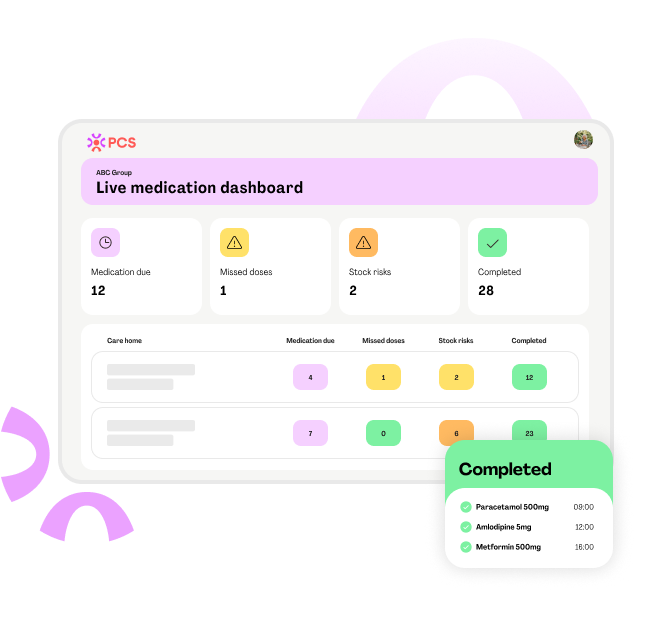
Want to strengthen your medicines management?
Explore how PCS eMAR by Camascope helps thousands of care homes improve safety, support CQC compliance and create a complete digital audit trail for medicines management.Other articles
Veteran-friendly care starts with recognising service
Learn about and request the free PCS Care section that helps you build a fuller picture of residents' Armed Forces backgrounds and service...
- 6 min read

Global PHP security issue: what it means for PCS customers
Recent reports of a critical PHP security vulnerability caused concern across the web. Find out how PCS responded, why customer services...
- 4 min read

Essential medication management training courses for care homes
Training for the safe management and administration of medicines is key for resident wellbeing, so here are some of the essential topics...
- 10 min read