
07.28.2026 Suzanne Worthington
What measures can be taken to turn good standards of care into outstanding?

When it comes to safety in care homes, meeting the basic standards is just the beginning. The regulations set by the CQC are there for good reason, making sure a minimum level of care and protection is in place. But if we’re honest, doing the bare minimum shouldn’t be where we stop. If we want to offer care that truly makes a difference, we have to ask ourselves a much bigger question: how can we do better?
Exceptional care homes don’t just see safety as a tick-box exercise. They treat it as something that touches every part of daily life. It’s part of how decisions are made, how people are treated, and how staff carry themselves. Going beyond compliance means choosing to do more, not because someone’s watching, but because the people living there deserve it.
Looking at safety in a different way
The first step is to rethink what we actually mean by safety. Most official guidance focuses heavily on physical risks – things like fire procedures, infection control, and safe handling of medication. These are all essential, of course, but they only scratch the surface.
Real safety includes how people feel. Do residents feel comfortable? Do they feel secure, listened to and respected? Do they have freedom to move about or make choices without unnecessary restrictions? Are staff working with them, not just for them, when making decisions that affect their lives? These are the things that really show whether a care home is safe, not just by the book, but in real life.
A home where people feel in control, where they are treated as individuals with voices that matter, is far safer than one that simply keeps people behind locked doors to avoid incidents.
Creating a culture where learning never stops
To provide this kind of care, staff need more than the standard training courses. The homes that stand out are the ones where learning is constant – where people are encouraged to reflect, share ideas, and question things that don’t feel right. It’s about building confidence, not just competence.
This might mean holding regular sessions where staff talk through real-life scenarios and what they would do differently next time. It could be peer-led discussions or reflective practice groups. These kinds of conversations help teams stay sharp and responsive, especially in unpredictable situations.
Just as important is creating a space where people can talk honestly about mistakes. Things do go wrong in care – it’s part of working with real people with complex needs. What matters is how we respond. If staff are afraid of getting into trouble, they won’t speak up. But if they feel supported to learn from what’s happened, the whole team gets stronger.
Leaders play a huge part in setting this tone. A manager who’s visible, who listens, and who takes concerns seriously will naturally encourage openness and trust. When people feel backed up and appreciated, they’re far more likely to give their best. A kind word, a bit of recognition, or a simple thank-you can go a long way in making staff feel valued. And when staff feel safe and supported, they’re better able to create that same feeling for the people they care for.
Making the best use of technology
There’s no denying that technology can help keep people safer. Things like fall sensors, acoustic monitoring, or digital care records can all make a big difference – when they’re used well. But there’s a fine line between using technology to help and letting it take over.
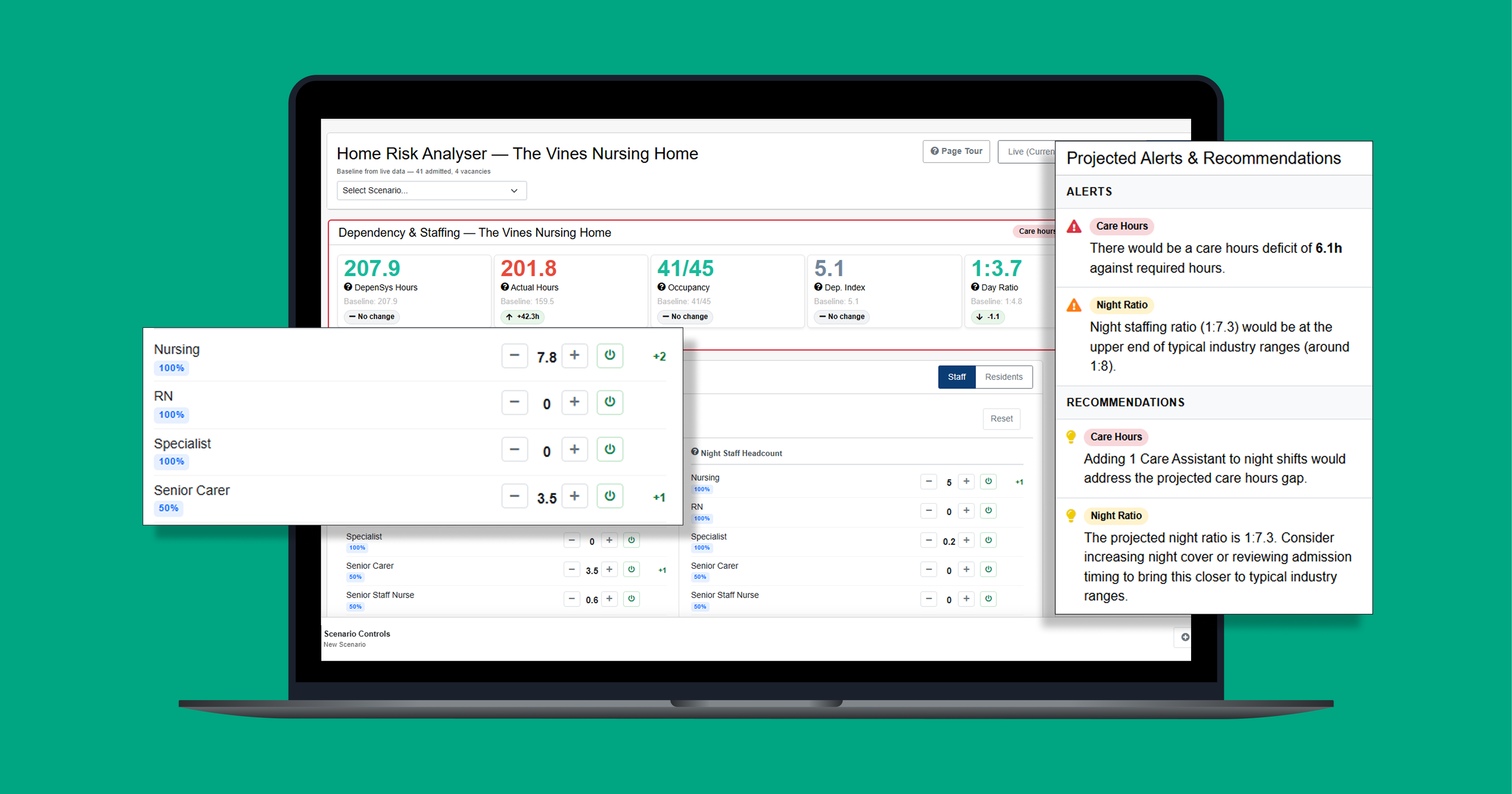
The best digital solutions should give carers more time to spend with residents, not add to their workload or replace personal interaction. For example, a well-designed digital care planning system should help staff spot patterns, track health changes, and share information easily. It shouldn’t feel like just another box to tick on a screen.
It’s also important to remember that residents are people, not data points. Their home should feel like a home, not a hospital or control centre. Before bringing in a new system or device, it’s worth asking: does this help people feel more secure, or more watched? Is it helping us give more personalised care, or getting in the way?
Used thoughtfully, technology can genuinely improve safety and wellbeing. But it should always be a tool that supports human care, not something that tries to replace it.
Listening to residents and families
Another key part of going beyond compliance is involving residents and their families in conversations about safety. Too often, decisions are made on their behalf rather than with them. But people know themselves better than anyone else. Including them in these decisions brings insights that no form or policy ever could.
This might mean talking about how night checks are done, how to manage risks around falls, or even which routines work best for each person. It could involve exploring options together rather than sticking rigidly to one ‘safe’ way of doing things.
These conversations can be tricky at times. Balancing safety and freedom isn’t always easy. But by working together, solutions tend to be more realistic and more likely to stick. When people feel included and respected, they’re also more likely to raise concerns early – before small issues become big problems.
Caring for mental and emotional wellbeing
One of the biggest parts of true safety is emotional security. Someone might be physically protected from harm, but if they feel isolated, anxious, or invisible, then something important is missing.
Loneliness, boredom and distress can have just as much impact as physical injuries. And the effects are often harder to see. That’s why emotional wellbeing has to be part of the picture.
This could be as simple as taking the time to sit and talk, organising activities that reflect people’s interests, or making sure each person has a say in how their day looks. Even little things like choosing their own clothes or deciding when they want to eat help people feel more in control.
A good care home doesn’t just keep people safe – it helps them feel secure, confident, and part of a community. It offers a sense of belonging and purpose. These things might not show up on a checklist, but they’re every bit as important.
What going the extra mile really means
At the heart of all this is a simple idea: doing the right thing, not just the required thing. Care homes that go beyond compliance ask more of themselves, not for awards or praise, but because they believe people in their care deserve the best possible life – not just safety from harm, but the chance to thrive.
That means showing empathy every day. It means being willing to listen, to learn, and to adapt. It means working together as a team – staff, residents, families – to build a place where people are treated with dignity, kindness and respect.
Regulations are important, and compliance is essential. But the best care homes don’t stop there. They use the standards as a foundation, then build something better on top. A place where safety is about more than rules – it’s about people.
And in the end, that’s what really matters. Not doing the minimum, but doing what’s right. To find out more about how our products can help you do that, just click here to read more about the Connected Care Platform.




.jpg)

.webp?width=80&height=80&name=HTD%20Awards%202023%20Badge%20(4).webp)