


07.28.2026 Suzanne Worthington
PCS Chief Product Officer Alex Potter discusses the future of care performance

After 25 years building digital products for pharmacies and care homes, I’ve learned that when you focus technology on the right problems, it can transform how care is delivered, and more importantly, the outcomes that result.
At Person Centred Software (PCS), we’re focused on one central idea: improving care performance. That doesn’t just mean better clinical results, but also enhancing the wellbeing of every resident, helping people live longer, happier, and more fulfilled lives in care.
This is the real product of every care home: the quality of care they deliver. Our mission is to help them continuously improve that product, making life better for both residents and carers.
Introducing the Care Performance Management System (CPMS)
Improving care performance requires more than just great software, it takes a system. That’s why we’ve built our approach around the Care Performance Management System (CPMS), a structured framework for continuous improvement.
CPMS is built on four key phases:
- Plan: Define the care you intend to deliver
- Do: Deliver care simply, effectively, and with compassion
- Review: Understand whether the care is delivering the desired outcomes
- Improve: Use insights to make changes that lift quality further
This cycle sits at the heart of everything we build. It turns day-to-day care delivery into a system of continuous learning—so every interaction becomes an opportunity to improve.
What’s Coming Next?
1. A Smarter, Faster Care Delivery App
We’re redesigning our Care Delivery App with a modern user interface while keeping the icon-driven workflows that our customers love. And as care homes grow and the volume of care data increases, we’re improving speed and responsiveness to ensure the app keeps pace with real-world needs.
2. Better Support for Planning and Review
While our tools already support effective care planning, we’re going further, making it easier to see whether care is having the impact it should. We will be diving into clinical workflows and making sure everything we do is focused of delivering the best outcomes for residents.
We will also support the use of generative AI, making it quicker to go from assessment to care plan and to the planned care activity that is provided through our care delivery app. Gen AI will also support you to identify inconsistency with your assessments and care plans, helping you to ensure you have a well rounded plan for every resident.
3. Benchmarking That Raises the Bar
Historically, understanding how a care home compares to others has been near impossible. We’re changing that. Using anonymised, standardised data from across our platform, we’re building the industry’s first real-time benchmarking tools.
Care homes will be able to compare themselves against national or regional averages across key metrics such as:
- Falls
- Infection rates
- Medication accuracy
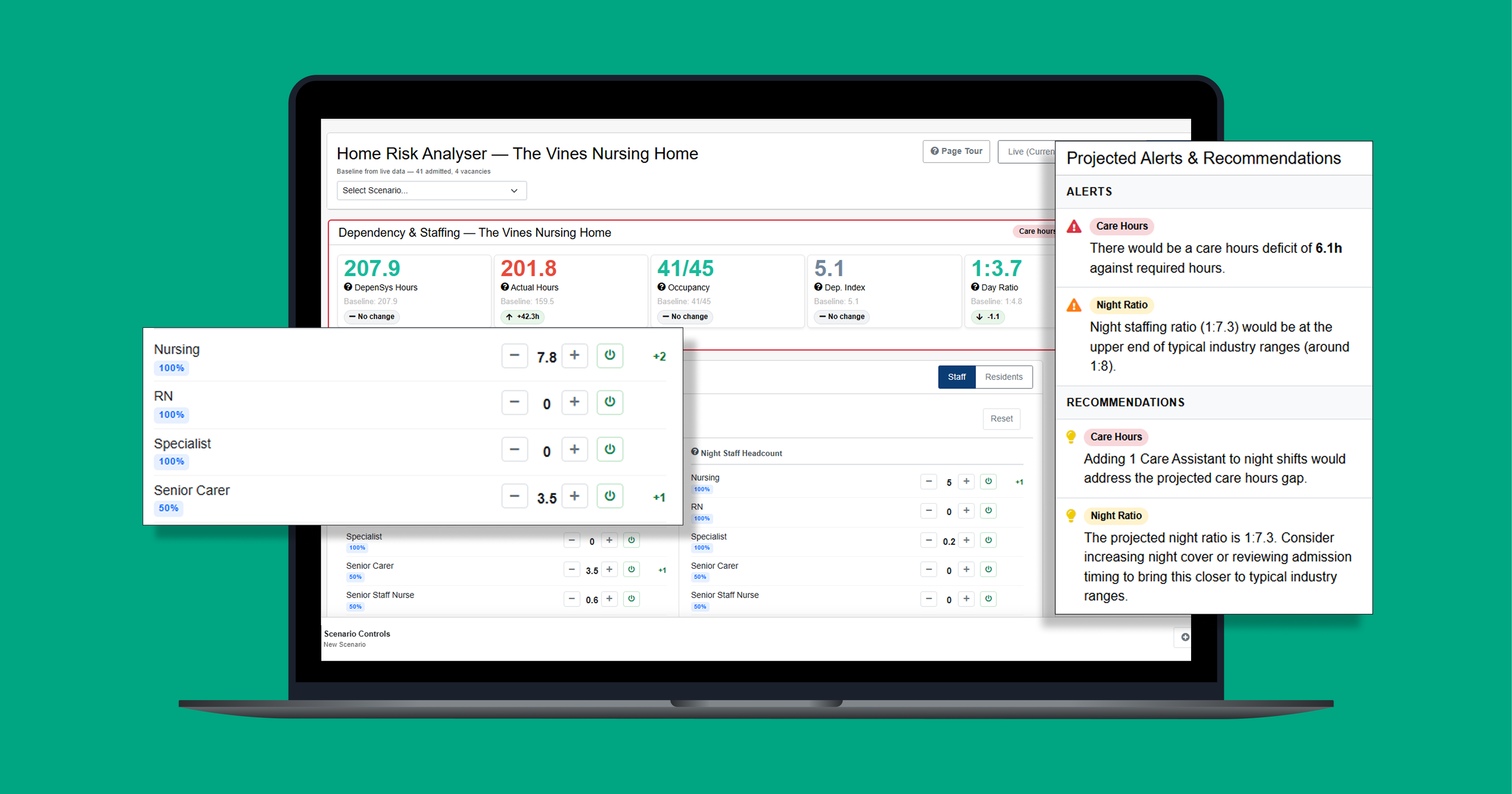
- Staffing levels
- Unplanned hospital admissions
We’ve identified 187 quality metrics, but we’ll focus on those that matter most, grouped into clear, actionable indicators that show where a care home is excelling and where improvement is needed.
This will give every care home a real-world view of performance, helping them understand not only what is happening, but why, and eventually, what might happen next.
The Future Is Measurable, Actionable, and Person-Centred
Our vision is simple: help care homes deliver better care outcomes, more easily, and more safely than ever before. And with the Care Performance Management System as the foundation, we’re turning care data into care intelligence—empowering homes to make better decisions, faster.
This is what the future of care performance looks like. And we’re proud to be building it—together.
For more information on the products of the Connected Care Platform, just click here.




.jpg)

.webp?width=80&height=80&name=HTD%20Awards%202023%20Badge%20(4).webp)